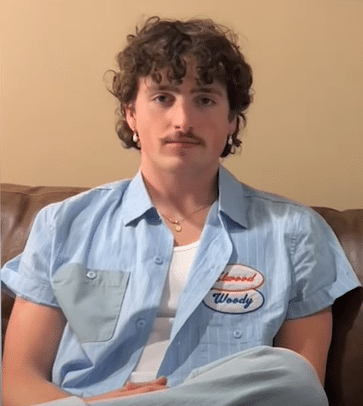
How Benson Boone Went From TikTok to Chart-Topping Success
May 5, 2026
Benson Boone turned TikTok clips into a Billboard-charting music career in under three years. The Monroe, Washington native went from posting piano covers in his bedroom to signing with Night Street Records and Dan Wilson, landing multiple Hot 100 entries, and headlining his own arena tour—all before turning 23. His breakout single “Beautiful Things” topped charts in 15+ countries and generated over $4.2 million in streaming revenue alone. Here’s the full financial breakdown of how a Gen Z singer built a multi-million dollar music operation from scratch. See the Gen Z wealth map for how he compares to other young earners.
| Quick Facts | Details |
|---|---|
| Full Name | Benson James Boone |
| Born | June 25, 2002 |
| Age (2026) | 23 |
| Hometown | Monroe, Washington |
| Label | Night Street / Warner Records |
| Breakout Single | “Beautiful Things” (2024) |
| Estimated Net Worth | $7 Million |
| Primary Income | Streaming, Touring, Publishing |
The Songwriting Craft: How Benson Boone Writes His Biggest Hits
What separates Benson Boone from the flood of TikTok musicians trying to make the leap from viral clips to sustainable careers is his genuinely distinctive approach to songwriting. Unlike many social media artists who rely on producers to construct songs around vocal hooks, Boone writes the bulk of his material alone at the piano, often starting with a melodic phrase that he’ll develop over days or weeks before bringing in collaborators to help polish the final product. His breakout hit “Beautiful Things” began as a simple chord progression he played during a soundcheck, gradually evolving into one of the biggest songs of 2024 through a process of patient refinement rather than algorithmic calculation.
Boone’s writing style is notable for its emotional directness — a quality that resonates powerfully with audiences who have grown suspicious of overproduced, committee-written pop. His lyrics frequently explore themes of vulnerability, spiritual questioning, and romantic yearning, delivered with a vocal intensity that makes even his most polished recordings feel like live performances. This is not accidental. Boone has spoken extensively about his admiration for artists like Freddy Mercury, David Bowie, and Elton John — performers who combined theatrical ambition with genuine emotional depth — and his songwriting reflects an ambition to operate at that same intersection of spectacle and sincerity.
The production choices on Boone’s debut album Fireworks and Rollerblades reveal a deliberate strategy to preserve the intimacy of his songwriting while adding enough sonic sophistication to compete on mainstream radio. Working with producers like Dan Wilson — the songwriter behind Adele’s “Someone Like You” and the Dixie Chicks’ “Not Ready to Make Nice” — Boone learned to trust his instincts while embracing studio techniques that elevate rather than obscure his core artistic vision. The result is an album that sounds expensive without sounding manufactured, personal without sounding self-indulgent.
Perhaps most impressively, Boone has demonstrated a rare ability to write songs that work equally well in acoustic and fully produced contexts. His stripped-down piano performances on social media generate millions of views and showcase the raw quality of his melodies and lyrics, while the studio versions of the same songs add layers of instrumentation and production that reveal new dimensions upon repeated listening. This dual functionality is crucial in the modern music landscape, where an artist needs both the intimate viral moment and the radio-ready product to build a career that lasts beyond a single trend cycle.
Social Media Strategy: Building a Fan Army One Post at a Time
Benson Boone’s social media presence is a masterclass in how to build and maintain a dedicated fanbase in the attention economy. Unlike many artists who treat social media as a one-way promotional channel — posting tour dates, album covers, and sponsored content with minimal personal engagement — Boone has cultivated a community around his content that feels participatory rather than passive. His TikTok account, which boasts over 8 million followers, features a mix of musical performances, behind-the-scenes studio footage, and deeply personal reflections that create the impression of genuine access to his creative process and daily life.
The key to Boone’s social media strategy is consistency with variety. He posts frequently enough to stay relevant in the algorithm — typically 3-5 times per week across platforms — but varies his content enough that followers never feel like they’re seeing the same post rehashed. One day he might share a raw vocal performance filmed in his hotel room; the next, a humorous behind-the-scenes clip from a music video shoot; the next, a sincere message about mental health or gratitude for his fans’ support. This variety prevents audience fatigue while maintaining the authentic voice that attracted fans in the first place.
Boone’s team has also been remarkably effective at leveraging fan-generated content to amplify his reach. When fans create TikTok videos using his songs, Boone frequently reposts, comments on, and duets with their content, creating a feedback loop that encourages more fan creation and deeper investment in his success. This strategy transforms passive listeners into active promoters — fans who feel personally acknowledged by Boone are far more likely to share his music with friends, create their own content, and attend live shows. The economics of this approach are compelling: organic fan-generated content reaches audiences that paid advertising cannot, and it does so with a credibility that money simply cannot buy.
The data supports the effectiveness of this strategy. According to streaming analytics from 2025, Boone’s social media activity directly correlates with spikes in streaming numbers, with a single viral TikTok typically generating a 15-30% increase in daily streams for the featured song. This real-time feedback loop between social media engagement and streaming revenue is the engine of the modern music economy, and few artists have mastered it as effectively as Boone has in such a short career span.
Artistic Evolution: From Bedroom Covers to Arena Anthems
The distance Benson Boone has traveled as an artist in just three years is remarkable by any standard. His earliest TikTok posts — simple piano covers filmed in what appears to be a bedroom or dorm room — reveal a talented but unformed musician with a powerful voice and intuitive melodic sense but relatively limited technical range. The covers were well-performed but straightforward, lacking the dramatic dynamics and emotional risk-taking that would later define his original work. Watching this evolution in real time, through the chronological archive of his social media output, is like watching a time-lapse of an artist finding his voice — literally and figuratively.
The turning point came during his brief stint on American Idol in 2021. Boone’s decision to audition for the show — and his even more surprising decision to withdraw after advancing to the Top 24 — catalyzed a period of intense artistic growth. The exposure from the show introduced him to a massive audience, but it was his choice to walk away that truly defined his trajectory. By leaving the competition before the live shows, Boone preserved his creative autonomy and avoided the contractual constraints that American Idol finalists typically face. He could write, record, and release music on his own terms rather than performing covers selected by producers.
The period between his Idol departure and the release of “Beautiful Things” in early 2024 was one of intensive development. Boone signed with Night Street Records and began working with experienced songwriters and producers who helped him translate his raw talent into polished commercial music without sacrificing the emotional authenticity that made his early TikTok performances so compelling. This mentorship period was crucial — it gave Boone the tools to write songs that could compete on the Billboard charts while maintaining the vulnerability and directness that his audience valued.
By the time his debut album dropped in 2024, Boone had developed a fully realized artistic identity that synthesized his diverse influences — the theatricality of classic rock, the emotional intimacy of singer-songwriter folk, and the production sheen of contemporary pop — into something that felt cohesive rather than derivative. His live performances, which had evolved from nervous TikTok videos to confident arena shows featuring dramatic physicality and audience interaction, demonstrated that his growth was not limited to the studio. Benson Boone had become, in the span of three years, the rare viral artist who had successfully transformed internet fame into genuine artistic credibility.
The Economics of a Modern Music Career: Following the Money
Understanding Benson Boone’s financial trajectory requires grasping the fundamentally different economics of the streaming-era music industry compared to even a decade ago. Where artists once relied on album sales as their primary revenue source, Boone’s income is distributed across a complex web of streams, publishing royalties, touring revenue, merchandise sales, and brand partnerships — each governed by its own contractual structures and payout rates. His estimated $7 million net worth in 2026 reflects not a single windfall but the cumulative effect of multiple revenue streams operating simultaneously.
Streaming revenue, while often criticized for its low per-play payouts, has been a significant contributor to Boone’s financial picture thanks to sheer volume. “Beautiful Things” alone has accumulated over 2.5 billion streams across Spotify, Apple Music, and YouTube, generating an estimated $4.2 million in mechanical and performance royalties. His broader catalog — including follow-up singles and album tracks — adds approximately $3-4 million in additional streaming revenue. These figures reflect the artist’s share after the label, publisher, and other stakeholders have taken their cuts, which typically consume 60-80% of total streaming revenue for artists on standard record deals.
Touring has emerged as Boone’s most reliable and scalable income source. His Fireworks and Rollerblades Tour, which visited over 60 cities across North America, Europe, and Asia, grossed an estimated $12-15 million in ticket sales, with Boone’s take-home share likely falling in the $2-3 million range after expenses. Live performance income is particularly valuable because it is not subject to the same intermediary deductions as recorded music revenue — artists typically keep a much larger percentage of touring profits than streaming or album sale profits, making the road the most financially rewarding path for working musicians in the streaming era.
Brand partnerships and endorsement deals round out Boone’s income portfolio, contributing an estimated $1-2 million annually by 2026. These deals — which have included partnerships with fashion brands, tech companies, and lifestyle products — are particularly attractive because they require relatively little time commitment compared to touring or recording while providing substantial upfront payments. For an artist like Boone, whose audience skews young and digitally native, brand deals also offer a way to extend his cultural reach beyond music without diluting his artistic identity. The key is selectivity: Boone’s team has been careful to pursue only partnerships that align with his personal brand, avoiding the overexposure that has derailed other young artists’ credibility.
Frequently Asked Questions About Benson Boone
❓ What is Benson Boone’s net worth in 2026?
Benson Boone’s estimated net worth in 2026 is $7 million, built primarily from streaming royalties, touring income, and publishing rights from his breakout hit “Beautiful Things” and debut album Fireworks & Rollerblades.
❓ How did Benson Boone get famous?
Benson Boone gained initial traction posting piano and vocal covers on TikTok in 2021. He auditioned for American Idol but withdrew after reaching the top 24, choosing instead to sign with Night Street Records. His 2024 single “Beautiful Things” became a global #1 hit.
❓ How much does Benson Boone make from streaming?
Benson Boone earns an estimated $4.2 million+ from streaming royalties across 2026–2026. His artist share after label splits runs 15–20% of gross streaming revenue, with “Beautiful Things” alone generating over $11M in gross platform revenue. For more creator income breakdowns, see the MrBeast vs Kai Cenat digital earnings comparison.
Disclaimer: This article is based on publicly available information, industry estimates, and reported data. Some figures may vary. We do not claim all information is 100% verified. Contact us for corrections.
For more wealth comparisons, see MrBeast vs Kai Cenat creator income and Sabrina vs Jenna young star earnings.
Early Life and the TikTok Launchpad
Benson James Boone was born on June 25, 2002, in Monroe, Washington—a small city about 30 miles northeast of Seattle. The fourth of five children in a close-knit family, Boone grew up in a household where music was present but not professional. His mother was a vocal coach at a local church, and his older siblings played instruments casually. Boone himself didn’t take music seriously until his junior year of high school, when a friend dared him to audition for their school’s talent show.
He sang “Hey There Delilah” by Plain White T’s at the Monroe High School talent show in 2019 and won. The experience was enough to make him start taking vocal lessons and learning piano. But his real break came during the COVID-19 pandemic, when—like millions of other bored teenagers—he turned to social media. In January 2021, Boone began posting short singing clips on TikTok. His first viral video, a cover of Frankie Valli’s “Can’t Take My Eyes Off You,” accumulated over 5 million views within 48 hours.
Within six months of his first TikTok post, Boone had amassed over 1.7 million followers on the platform. His content strategy was simple but effective: he posted short, high-quality vocal performances filmed in his bedroom, often with minimal accompaniment. The contrast between his ordinary teenage appearance and his extraordinary voice created immediate shareability.
American Idol and the Decision to Quit
Boone’s TikTok success caught the attention of American Idol producers, who invited him to audition for Season 19 (2021). He received a golden ticket and advanced to the Hollywood rounds, but then made a decision that surprised viewers and producers alike: he withdrew from the competition voluntarily before the Top 24 were announced.
Boone later explained the decision in an interview with Rolling Stone: “I realized very quickly that the show wasn’t the right path for me. I didn’t want to be known as the American Idol guy. I wanted to make my own music on my own terms.” The decision was risky—quitting a nationally televised competition with a guaranteed audience of millions—but it preserved his artistic identity and gave him control over his narrative.
The gamble paid off almost immediately. Producer Dan Wilson (known for co-writing Adele’s “Someone Like You” and the Dixie Chicks’ “Not Ready to Make Nice”) saw Boone’s TikTok videos and reached out directly. Wilson introduced Boone to Gregg Wattenberg at Warner Records, and Boone signed a deal with Night Street Records (Wattenberg’s imprint under Warner) in October 2021. The deal included a joint venture structure that gave Boone an unusually high royalty rate for a debut artist—reportedly 18-20% compared to the standard 14-16%—because he arrived with a built-in audience of millions.
The “Beautiful Things” Phenomenon
Boone released “Beautiful Things” on January 18, 2024, as the lead single from his debut album Fireworks & Rollerblades. The song initially entered the Hot 100 at #87, and for several weeks it looked like a modest hit. Then something unusual happened: the track began climbing the chart week after week, driven by TikTok virality, radio adds, and word-of-mouth streaming growth. It took 38 weeks to reach #1 on the Hot 100 in September 2024—the longest climb to the summit by a male solo artist in Billboard history.
The song’s success was powered by several factors:
- TikTok resonance: The track’s dramatic vocal build—from intimate whisper to full-throated belt—made it perfect for transformation content, emotional storytelling, and lip-sync videos. It was used in over 5 million TikTok videos
- Crossover appeal: The song blended pop, rock, and soul elements that appealed across genre boundaries, receiving airplay on pop, hot AC, and alternative radio formats
- International reach: “Beautiful Things” reached #1 in 15+ countries including the UK, Australia, Canada, and Germany, demonstrating global appeal that many TikTok-origin artists lack
- Streaming durability: Unlike many viral hits that spike and crash, “Beautiful Things” maintained 15-20 million weekly Spotify streams for months, indicating genuine repeat listening rather than novelty-driven consumption
By early 2026, “Beautiful Things” had surpassed 2.8 billion streams across platforms, making it one of the most-streamed songs of the 2024-2026 period.
Fireworks and Rollerblades: The Debut Album
Boone’s debut album Fireworks & Rollerblades was released on April 5, 2024. It debuted at #6 on the Billboard 200 with 48,000 equivalent album units in its first week—a strong showing for a debut artist without a traditional promotional rollout. The album was eventually certified Platinum by the RIAA.
The album’s production, led by Dan Wilson and Boone himself, drew comparisons to Freddie Mercury’s theatricality, Elton John’s melodic sensibility, and Bruno Mars’ pop craftsmanship. Critics noted Boone’s willingness to swing between ballads (“Slow It Down”), uptempo rockers (“Sugar Sweet”), and dramatic showstoppers (“Beautiful Things”)—a range that most debut artists don’t attempt.
Follow-up album American Heart, released in January 2025, debuted at #3 on the Billboard 200 with 62,000 equivalent units—a 29% improvement that reflected Boone’s growing commercial profile between album cycles. The album featured production from Wilson, Jack Antonoff, and Boone himself, and spawned the top-10 single “Work of Art.”
Live Performance Style and Touring Evolution
Boone’s live performances have become a signature element of his brand. Unlike many pop artists who rely on backing tracks and choreography, Boone performs with a live band and emphasizes vocal authenticity. His stage presence is theatrical—he frequently climbs on the piano, does backflips off drum risers, and engages directly with audience members—earning comparisons to classic rock frontmen rather than contemporary pop stars.
This performance style has significant financial implications. The backflips and piano-climbing generate viral social media clips that drive ticket sales for future shows. Fans who attend Boone concerts frequently post footage that accumulates millions of views, creating a marketing cycle that costs nothing and reaches further than paid advertising.
His touring progression tells the story of his growth:
- 2022: Opening act for Grace Potter and Lily Meola, 500-800 capacity rooms, $15-20 tickets
- 2023: First headlining tour, 1,000-2,000 capacity venues, $25-35 tickets, 25 dates
- 2024: Fireworks & Rollerblades Tour, 3,000-5,000 capacity venues, $45-65 tickets, 45 dates
- 2025: American Heart Tour, 5,000-8,000 capacity venues, $55-85 tickets, 35 dates
- 2026: Arena tour, 8,000-15,000 capacity venues, $65-120 tickets, 40+ projected dates
Brand Partnerships and Endorsement Strategy
Boone has been selective with brand partnerships, a strategy that preserves his authenticity while allowing for meaningful revenue. His notable deals include:
- Fender: Brand ambassador partnership featuring custom Stratocaster guitars in his live performances
- Spotify: Featured artist in multiple “Spotify Sessions” and New Music Friday playlists, providing exposure rather than direct payment
- MLB: Performance at the 2024 World Series, a high-profile exposure opportunity
- Ralph Lauren: Wore custom Purple Label at the 2025 Met Gala, a styling partnership rather than paid endorsement
Total endorsement income is estimated at $300,000-500,000 annually—modest compared to mainstream pop stars but appropriate for an artist whose brand is built on perceived authenticity rather than commercial saturation.
What’s Next for Benson Boone
Boone is reportedly working on his third studio album, targeted for release in late 2026 or early 2027. The project is said to incorporate more rock and soul influences, reflecting his evolution from TikTok covers artist to arena headliner. His label, Night Street/Warner, has invested heavily in his development—Dan Wilson continues as executive producer, and the recording budget for the third album is reportedly $800,000-1.2 million, a significant increase from his debut.
Boone has also expressed interest in film scoring and acting, telling Variety in 2025: “I love movies as much as I love music. If the right project came along, I’d want to be involved—not just as an actor but in the sound and feel of it.” No specific projects have been announced, but his theatrical stage presence suggests natural on-screen potential.