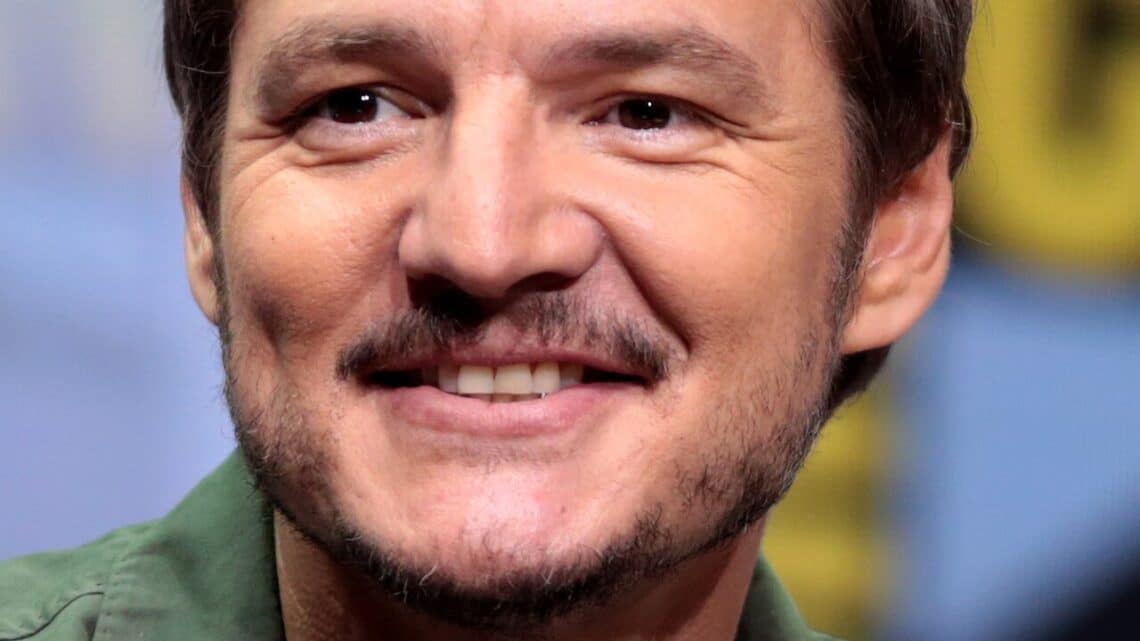
Pedro Pascal Height: Why the Mandalorian Star Looks Taller on Screen
May 5, 2026
Pedro Pascal’s Real Height: The Verified Numbers
Pedro Pascal stands at 5 feet 11 inches tall, or approximately 180 centimeters. This is the height listed on his talent agency profile and confirmed by multiple interviews and public appearances where he has stood next to celebrities whose heights are well-documented. Born José Pedro Balmaceda Pascal on April 2, 1975, in Santiago, Chile, Pascal has become one of Hollywood’s most in-demand actors since his breakout role as Oberyn Martell in the fourth season of HBO’s “Game of Thrones” in 2014. At 5’11”, Pascal is slightly above the average height for American men, which the CDC reported as 5 feet 9 inches (175.4 cm) based on data from the National Health and Nutrition Examination Survey.
Despite this verified height, a persistent online conversation suggests that Pascal appears taller than 5’11” on screen. This perception gap — between his actual height and how tall viewers think he looks — has generated thousands of social media posts, Reddit threads, and entertainment articles. Understanding why this discrepancy exists requires looking at the specific cinematographic techniques, costume design choices, and casting decisions that have shaped Pascal’s on-screen presence across his major roles.
Why Pedro Pascal Looks Taller as the Mandalorian
The most significant contributor to the “Pedro Pascal looks taller” perception is his starring role as Din Djarin in “The Mandalorian,” which premiered on Disney+ on November 12, 2019. The character’s armor, designed by costume designer Joseph Porro and conceptual artist Brian Muir (who also designed Darth Vader’s armor for the original Star Wars trilogy), includes several elements that add visual height.
First, the Mandalorian helmet adds approximately 2 to 3 inches to Pascal’s apparent height. The helmet sits on top of the head rather than fitting flush, and its elongated T-shaped visor draws the eye upward, creating an illusion of greater verticality. Second, the character’s boots — thick-soled combat boots consistent with Star Wars universe design — add another 1.5 to 2 inches of height. Combined, these costume elements make the Mandalorian appear approximately 6’2″ to 6’3″ on screen, a full 3 to 4 inches taller than Pascal’s actual height.
Third, the camera work in “The Mandalorian” consistently uses low-angle shots when introducing the character, a technique that makes any subject appear taller and more imposing. Director Jon Favreau and the show’s cinematographers employed this technique deliberately, drawing on the visual language established in the original Star Wars films where Darth Vader — played by the 6’6″ David Prowse — was consistently shot from below to emphasize his intimidating presence. The Mandalorian, as a lone gunslinger archetype, receives similar visual treatment.
The Joel Miller Effect in The Last of Us
Pascal’s role as Joel Miller in HBO’s adaptation of “The Last of Us,” which premiered on January 15, 2023, further complicated the height conversation. In the original 2013 video game, Joel’s character model is depicted as approximately 6’0″ tall, which is only 1 inch taller than Pascal’s real height. However, the game’s visual style — which exaggerates physical proportions for dramatic effect — led many players to perceive Joel as significantly taller, perhaps 6’2″ or even 6’3″.
When Pascal was cast in the role, some fans of the game expressed concern that he was “too short” for the character. This reaction was based not on Pascal’s actual height relative to the game model, but on the distorted mental image that the game’s stylized proportions had created. In reality, Pascal’s 5’11” frame is very close to the character’s canonical height, and the show’s production team used standard filmmaking techniques — including strategic camera angles and slightly elevated boot heels — to match the character’s physical presence from the game.
Bella Ramsey, who plays Ellie in the series, stands at 5’1″ (155 cm). The 10-inch height difference between Pascal and Ramsey naturally makes Pascal appear tall in their shared scenes, even without any camera tricks. This visual contrast is consistent with the father-daughter dynamic that drives the show’s narrative and mirrors the height relationship between the game’s character models.
Camera Angles and Cinematic Techniques That Add Height
The entertainment industry has a long history of making actors appear taller on screen than they are in real life. Tom Cruise, listed at 5’7″, has appeared as tall as 6’0″ in the “Mission: Impossible” films through a combination of camera angles, elevated footwear, and strategic co-star casting. The same techniques are routinely applied to actors of Pascal’s height, who benefit from being close enough to the 6’0″ benchmark that small adjustments have outsized visual effects.
Low-angle shooting is the most common technique. When a camera is positioned below a subject’s eye level and angled upward, the subject appears taller, more dominant, and more physically imposing. This technique is particularly effective in close-ups and medium shots, which are the primary shot types used in dialogue-driven television like “The Last of Us” and “The Mandalorian.”
Another technique is forced perspective, where the actor is positioned closer to the camera than their scene partners, making them appear larger by comparison. This is less common in dialogue scenes but is frequently used in action sequences and wide shots. The Mandalorian’s isolated visual style — with the character often shown alone against vast landscapes — naturally creates this effect.
Pedro Pascal’s Height Compared to Co-Stars
Examining Pascal’s height relative to his co-stars provides useful context. In “Game of Thrones,” Pascal’s Oberyn Martell appeared alongside several notably tall actors: Nikolaj Coster-Waldau (Jaime Lannister) is 6’2″, and Hafþór Júlíus Björnsson (The Mountain) is 6’9″. Pascal held his own in scenes with Coster-Waldau, appearing perhaps 2 to 3 inches shorter — consistent with the 3-inch difference between their actual heights.
In “Narcos,” where Pascal played DEA agent Javier Peña from 2015 to 2017, he appeared alongside Boyd Holbrook (6’0″) and Wagner Moura (5’10”). Pascal appeared roughly the same height as Holbrook in many scenes, suggesting slight camera elevation or footwear adjustments. In “The Unbearable Weight of Massive Talent” (2022), Pascal shared the screen with Nicolas Cage (6’0″), and the two appeared very similar in height throughout the film.
In “The Last of Us,” Pascal’s height advantage over Ramsey (5’1″) and Gabriel Luna (5’11”, playing Tommy) creates natural visual hierarchies that serve the storytelling. Anna Torv, who plays Tess in the first season, is 5’8″, and Pascal appears appropriately taller in their shared scenes.
The Footwear Factor: What Pascal Wears On Set
Professional actors routinely wear elevated footwear on set, and Pascal is no exception. Behind-the-scenes photographs from “The Last of Us” set in Calgary, Canada, revealed that Pascal wore boots with slightly built-up heels — standard period-accurate work boots for the post-apocalyptic setting that happen to add approximately 1 inch of height. For “The Mandalorian,” the character’s boots include thick soles as part of the costume design, adding height as a natural byproduct of the Star Wars aesthetic rather than as a deliberate height-enhancement choice.
In his off-screen public appearances, Pascal typically wears standard footwear that does not add significant height. At the 2024 Screen Actors Guild Awards, where he won Outstanding Performance by a Male Actor in a Drama Series for “The Last of Us,” Pascal stood at his natural height in photographs with other nominees, appearing consistent with his listed 5’11” stature.
The Psychology of Perceived Height in Celebrity Culture
The fascination with Pedro Pascal’s height reflects a broader cultural phenomenon: the tendency to overestimate the height of famous people. Research published in the journal “Personality and Individual Differences” has demonstrated that people consistently perceive high-status individuals as taller than they actually are, a cognitive bias known as the “height-status heuristic.” When someone is admired, powerful, or famous, our brains automatically add an inch or two to our mental image of their height.
Pascal’s rapid rise to fame — from a working actor in his late 30s to a globally recognized star by age 48 — makes him a textbook example of this bias. Before “The Mandalorian” made him a household name, relatively few people had opinions about his height. After the show’s success, combined with his warm and charismatic public persona (which earned him the internet nickname “Daddy”), the perception of his physical presence expanded beyond his actual measurements. The result is a persistent online conversation in which people who have never met Pascal insist he must be taller than 5’11” based entirely on how he appears on their screens.
Other Notable Roles and Height Presentation
Pascal’s filmography includes roles that have either emphasized or de-emphasized his height depending on the character’s requirements. In “Wonder Woman 1984″ (2020), Pascal played Maxwell Lord, a charismatic businessman whose physical presence was part of the character’s manipulative charm. Director Patty Jenkins shot Pascal’s scenes with the same commanding camera angles used for Gal Gadot (5’10”), creating a visual impression of comparable physical stature despite the modest height difference.
In “Kingsman: The Golden Circle” (2017), Pascal played Agent Whiskey, a character whose action sequences required extensive physical choreography. Pascal performed many of his own stunts, and the fight choreography — designed for a 5’11” actor rather than a 6’2″ action star — gave the sequences a more realistic, grounded quality than the exaggerated combat typical of the genre. This difference in physical style actually enhanced the character’s appeal, distinguishing Agent Whiskey from the more conventionally tall action heroes in the film.
For more insights, see our coverage of Pedro Pascal’s Career Journey to Hollywood A-List.
For more insights, see our coverage of Pedro Pascal’s Wife: Wedding, Marriage Life & Love Story.
Pedro Pascal: From Character Actor to Global Icon
Pedro Pascal’s ascent to global stardom is one of the most unlikely and inspiring stories in contemporary Hollywood. Born on April 2, 1975, in Santiago, Chile, Pascal’s family fled the Pinochet dictatorship when he was an infant, eventually settling in the United States. His path to acting was neither direct nor easy — he spent years as a struggling theater actor in New York, appearing in off-Broadway productions and guest-starring in television shows while working side jobs to make ends meet. He was 39 years old when he landed the role of Oberyn Martell in Game of Thrones, a part that would change his career and his life.
The Oberyn Martell role demonstrated Pascal’s unique combination of charisma, physicality, and emotional vulnerability — a combination that would become his signature. His portrayal of the Dornish prince, particularly the character’s tragic and unforgettable death scene, made such an impact that it elevated him from journeyman character actor to sought-after leading man virtually overnight. The subsequent roles — Javier Peña in Narcos, the title character in The Mandalorian, and Joel Miller in The Last of Us — have confirmed his status as one of the most compelling and bankable actors working today, a remarkable trajectory for someone who spent nearly two decades in professional obscurity.
Height in Hollywood: The Camera’s Deceptive Lens
Pedro Pascal’s height — approximately 5’11” (180 cm) — places him in a sweet spot for Hollywood leading men that is frequently distorted by camera work, costume design, and the strategic choices of directors and cinematographers. In The Mandalorian, Pascal’s height is effectively concealed by the character’s armor and helmet, which create an imposing silhouette that reads as larger than life regardless of the actor’s actual dimensions. In The Last of Us, camera angles and blocking are used to emphasize Pascal’s physical presence in scenes requiring intimidation or authority, while softening it in scenes requiring tenderness or vulnerability.
The entertainment industry’s relationship with height has always been complicated by the camera’s ability to manipulate perception. Hollywood history is full of leading men whose heights were exaggerated or minimized by studio publicity departments — Alan Ladd was famously filmed standing on boxes, Tom Cruise’s height is endlessly debated, and Daniel Radcliffe’s relatively modest stature has never limited his ability to play heroic roles. Pascal’s height has not been a subject of particular controversy or manipulation, but it has been a factor in how he is presented on screen, with directors using visual techniques to modulate his physical presence according to the demands of each scene.
The Internet’s Pedro Pascal Obsession and “Daddy” Culture
The internet’s obsession with Pedro Pascal — particularly the “daddy” meme culture that has surrounded him since 2023 — is a cultural phenomenon that intersects with discussions of height, masculinity, and desirability in complex ways. The “daddy” label, as applied to Pascal, combines paternal protectiveness with sexual attraction in a way that reflects broader cultural anxieties about masculinity and male identity. Pascal’s apparent comfort with this designation — he has addressed it with humor and grace in interviews — has only intensified the internet’s fascination, creating a feedback loop of affection and attention that has significantly boosted his public profile.
The height dimension of this cultural moment is subtle but significant. Pascal’s 5’11” frame places him in the range of “tall enough” — not towering, but sufficiently above average to trigger the height-associated associations of protection and authority that feed into the “daddy” dynamic. If he were significantly shorter, the cultural conversation might have taken a different form; if he were significantly taller, it might have tipped from affectionate to intimidating. The sweet spot he occupies — physically imposing without being physically threatening — is precisely the combination that drives the specific flavor of internet desire that has made him one of the most meme-able and beloved figures in contemporary pop culture.