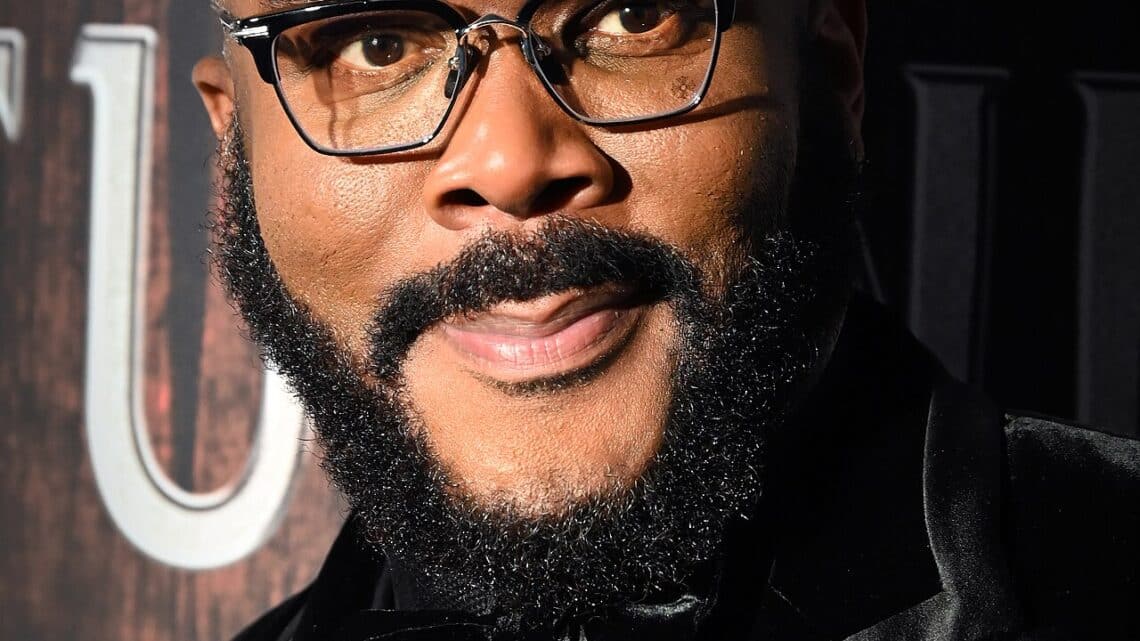
Tyler Perry Net Worth Revealed: 2026 Financial Overview & Assets
May 5, 2026
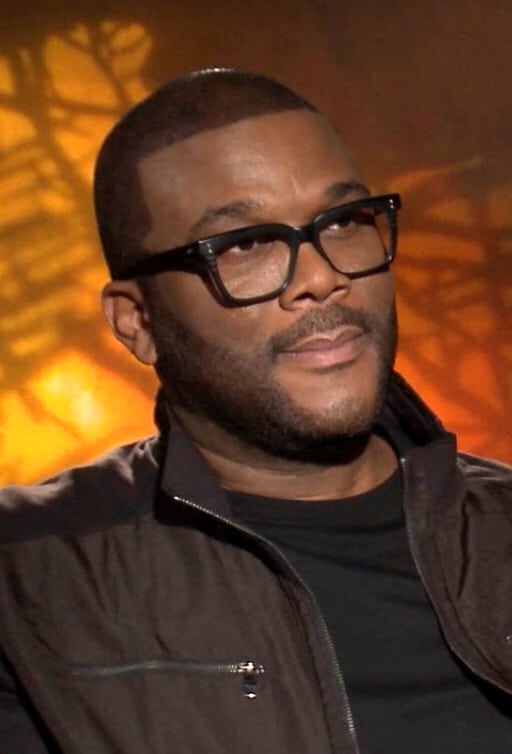
Tyler Perry has built an entertainment empire that stretches far beyond the silver screen, making him one of the wealthiest figures in Hollywood. As of 2026, his net worth reflects decades of strategic business decisions, creative output, and an unmatched work ethic that has produced over 1,200 episodes of television and 24 feature films. His journey from living out of his car to becoming a billionaire media mogul is one of the most compelling success stories in modern entertainment history.
Tyler Perry Net Worth in 2026: The Numbers
According to multiple financial publications and public filings, Tyler Perry’s net worth in 2026 is estimated at approximately $1.4 billion. This figure places him among the wealthiest entertainers in the world and makes him the first billionaire in the entertainment industry to have built his fortune primarily through independent content creation rather than corporate deals or inherited wealth. The vast majority of his wealth comes from his wholly-owned content library, his 330-acre Tyler Perry Studios complex in Atlanta, and his production deal with Netflix.
How Tyler Perry Built His Fortune
Tyler Perry Studios: A Self-Made Empire
The crown jewel of Perry’s financial portfolio is Tyler Perry Studios, a 330-acre production facility located on the former Fort McPherson military base in Atlanta, Georgia. Purchased for approximately $30 million in 2015, the studio has since appreciated significantly in value and is now estimated to be worth well over $250 million. The facility includes 12 sound stages, a massive backlot, and enough infrastructure to produce multiple film and television projects simultaneously. Unlike most entertainment figures who rent studio space, Perry owns his production infrastructure outright, which means he keeps a far larger share of the revenue generated by his projects.
The Content Library
Perry owns 100% of his content library, which includes the wildly successful Madea franchise, numerous stage plays, television series such as Sistas, The Oval, House of Payne, and Assisted Living, along with his feature films. Industry analysts estimate that the content library alone is valued between $300 million and $400 million. The recurring revenue from licensing deals, streaming rights, and syndication continues to generate substantial passive income year after year. This ownership model is extraordinarily rare in Hollywood, where studios typically retain the rights to content and pay creators royalties.
Netflix Partnership and Streaming Revenue
In 2023, Perry signed a multi-year production deal with Netflix that reportedly pays him between $40 million and $50 million annually. Under this agreement, he produces original films and series exclusively for the platform. Titles such as A Jazzman’s Blues, A Madea Homecoming, and several other projects have performed strongly on the streaming service, consistently appearing in the Netflix Top 10 during their debut weeks. The Netflix deal provides a guaranteed revenue stream that supplements his independent productions and studio rental income.
Real Estate Holdings
Beyond the studio property, Perry owns an impressive portfolio of residential real estate. His primary residence is a 25,000-square-foot mansion in the Buckhead neighborhood of Atlanta, valued at approximately $18 million. He also owns a sprawling estate in Los Angeles, purchased for $14.5 million, and additional properties in Georgia and Wyoming. Combined, his residential real estate is estimated to be worth over $60 million.
Tyler Perry’s Income Breakdown (Annual Estimates)
- Netflix Production Deal: $40-50 million per year
- Studio Rental Income: $15-25 million per year (renting sound stages to other productions)
- Content Licensing and Syndication: $20-30 million per year
- Box Office Revenue (when films are released theatrically): Variable, averaging $10-20 million per year
- Stage Play Tours: $5-10 million per year
These combined income streams push Perry’s annual earnings to well over $100 million in most years, with particularly lucrative years exceeding $150 million when major film releases coincide with new television deals.
Philanthropy and Giving Back
Despite his enormous wealth, Perry has become equally known for his philanthropic efforts. He has donated millions to charitable causes, including covering rent for thousands of Atlanta residents during the COVID-19 pandemic, funding scholarships for underprivileged students, and supporting disaster relief efforts. In 2024, he pledged $5 million to support affordable housing initiatives in Atlanta. His giving philosophy reflects his own difficult upbringing and his belief that those who achieve extraordinary success have a responsibility to lift others up.
What Sets Tyler Perry’s Wealth Apart
What distinguishes Perry from virtually every other billionaire entertainer is the degree to which he controls his own destiny. He does not rely on a major studio for distribution, does not share ownership of his content with corporate partners, and does not answer to shareholders. This independence means that his wealth is not subject to the same market volatility that affects publicly traded media companies. Every project he greenlights generates revenue that flows directly to him and his privately held companies.
Tyler Perry Studios: The 330-Acre Empire in Atlanta
The crown jewel of Tyler Perry’s asset portfolio is Tyler Perry Studios, a 330-acre production facility located on the former Fort McPherson military base in Atlanta, Georgia. Perry purchased the property in 2015 for approximately $30 million and invested an additional $250 million in renovations and construction, transforming the decommissioned Army base into one of the largest film production studios in the United States. The facility officially opened in October 2019 with a star-studded ceremony attended by Oprah Winfrey, Samuel L. Jackson, Halle Berry, and then-presidential candidate Joe Biden.
The studio complex includes 12 soundstages ranging from 10,000 to 60,000 square feet, a 400-acre backlot with 40 built-to-scale standing sets including a replica of the White House, and dedicated production office space. The scale of the operation rivals major studio lots in Los Angeles — for context, Warner Bros. Studios in Burbank operates on 110 acres, and Universal Studios occupies 415 acres including the theme park. Perry’s decision to build in Atlanta rather than Los Angeles was both financial and strategic: Georgia offers a 30% tax credit on qualified production expenditures, making it significantly cheaper to produce content there than in California.
Tyler Perry Studios has hosted major productions beyond Perry’s own projects. Films including Black Panther (2018), Avengers: Endgame (2019), and The Hunger Games: Catching Fire (2013) — the latter before Perry acquired the property — were filmed at the location. The studio’s rental income from external productions adds a significant revenue stream independent of Perry’s own creative output. Industry estimates suggest the facility generates between $20 million and $40 million annually in rental revenue from outside productions alone.
The Netflix Deal and Streaming Revenue
In 2023, Perry signed an extended content deal with Netflix reported to be worth approximately $150 million over multiple years. The agreement grants Netflix first-look rights to Perry’s film and television projects and includes commitments for a minimum number of productions. Under this deal, Perry has delivered films including A Jazzman’s Blues (2022), which he wrote, directed, and produced, and A Fall from Grace (2020), which was viewed by 26 million households in its first week on the platform according to Netflix’s own reporting.
The Netflix arrangement represents a strategic shift for Perry, whose content had previously been distributed primarily through Lionsgate (for his theatrical films) and through his own platforms. BET (Black Entertainment Television), owned by Paramount Global, had been Perry’s primary television partner since 2012, when he signed a multi-year deal to produce original series for the network. That partnership generated hits like The Haves and the Have Nots, which ran for eight seasons and was BET’s highest-rated scripted series, and Sistas, which debuted in 2019 and continues to air. Perry’s ability to maintain relationships with both Netflix and BET simultaneously illustrates the leverage that comes with owning your own production infrastructure.
Real Estate Portfolio: Properties Across America
Perry’s real estate holdings extend well beyond the Atlanta studio. In 2020, he purchased a 25-acre estate in the Douglassville area of Atlanta for approximately $15 million. The property features a 35,000-square-foot main residence with amenities including a gym, spa, home theater, and an infinity pool overlooking a private lake. The estate also includes a separate guest house and staff quarters. This property serves as Perry’s primary residence when he is in Atlanta for production work.
In Los Angeles, Perry owned a 22-acre property in the affluent Westlake Village neighborhood, which he purchased for approximately $14.5 million in 2017. The estate featured a Mediterranean-style main house and extensive grounds. Perry sold this property in 2023 for a reported $16.5 million, realizing a profit of approximately $2 million. He also previously owned a 17,000-square-foot mansion in the Paces neighborhood of Buckhead in Atlanta, which he sold in 2019 for $4.6 million after listing it for $5.2 million.
In 2023, Perry made headlines when he purchased a property in the White Rock neighborhood of Dallas, Texas, for a reported $8.5 million. The acquisition fueled speculation about whether Perry might expand Tyler Perry Studios beyond Atlanta, though no official plans have been announced. His total real estate portfolio, including the studio property, personal residences, and investment properties, is estimated to be worth between $75 million and $100 million based on current market valuations.
Full Ownership Model: Why Perry Keeps 100% of Everything
The most distinctive aspect of Tyler Perry’s financial structure is his commitment to full ownership. Unlike virtually every other major entertainer in Hollywood, Perry owns 100% of his content. He writes, directs, produces, and finances his own projects, then licenses the distribution rights to studios and streaming platforms. This means he retains all back-end profits, all merchandising rights, and all future licensing revenue. When a Tyler Perry film grosses $100 million at the box office, the distribution studio takes its fee (typically 15-35%), and Perry keeps the remainder — rather than the more common arrangement where the studio owns the content and the creative talent receives a negotiated percentage.
This ownership model was born from necessity. Early in his career, Perry could not secure traditional studio financing for his plays and films, which were targeted primarily at African American audiences that Hollywood consistently undervalued. By self-financing through live theater revenue — his stage plays regularly grossed $20-50 million per tour — Perry built a production war chest that freed him from ever needing studio money. The result is a $1.4 billion net worth (as of 2025-2026 estimates) that is almost entirely self-generated, with no studio partners, no outside investors in his content, and no debt on his studio facility.
Tyler Perry’s Career Timeline: From Homelessness to Billions
The trajectory of Perry’s career is defined by a series of inflection points where personal crisis met creative determination. Born Emmitt Perry Jr. on September 13, 1969, in New Orleans, Louisiana, he endured a childhood marked by physical abuse at the hands of his father and poverty that shaped his later commitment to philanthropy. In 1992, while working various odd jobs in Atlanta and living in his car, he wrote his first play, I Know I’ve Been Changed, using $12,000 in life savings to fund its production at a small Atlanta theater. The play bombed, and Perry spent the next six years rewriting and re-producing it, accumulating approximately $40,000 in credit card debt before it finally found an audience in 1998.
Between 1998 and 2005, Perry built a theater empire through touring stage plays that targeted African American audiences underserved by mainstream entertainment. Plays including Diary of a Mad Black Woman, Madea’s Family Reunion, and Why Did I Get Married? grossed an estimated $100 million combined in live ticket sales, with profit margins of 40% to 60% because Perry owned every aspect of production. This cash flow funded his transition to film: his first movie, Diary of a Mad Black Woman (2005), was produced for approximately $5.5 million and grossed $50.6 million domestically, an approximate 820% return on investment that established Perry as a bankable filmmaker.
The Madea character, which Perry has portrayed in 12 films and numerous stage productions, has generated over $1 billion in combined worldwide box office revenue across its filmography. The franchise’s consistent profitability — most Madea films are produced for $15 million to $25 million and gross $50 million to $90 million — reflects Perry’s understanding of his audience and his refusal to inflate production budgets beyond what the target market can deliver at the box office. This discipline has been central to his financial success.
Peer Comparison: Tyler Perry vs Other Billionaire Entertainers
| Entertainer | Est. Net Worth (2026) | Primary Wealth Source | Content Ownership |
|---|---|---|---|
| Tyler Perry | $1.4B | Studio, Content Library, Netflix | 100% |
| Oprah Winfrey | $2.5B | OWN Network, Harpo Productions | Majority |
| Jay-Z | $2.5B+ | Music, Armand de Brignac, Tidal | Partial |
| Steven Spielberg | $4.8B | Film directing, Amblin Partners | Partial |
| George Lucas | $5.5B | Lucasfilm sale to Disney | Former (sold) |
What distinguishes Perry from every other billionaire on this list is the absence of a liquidity event. Spielberg became wealthy through a combination of directing fees and profit participation, but much of his net worth is tied to the valuation of Amblin Partners, which has outside investors. Lucas sold Lucasfilm to Disney for $4.05 billion in 2012. Jay-Z’s wealth includes stakes in companies he does not fully control. Perry’s $1.4 billion is built entirely on assets he owns outright, with no outside equity partners, no corporate parents, and no debt on his primary asset. This structure gives him complete creative and financial control — and makes his wealth more durable than that of entertainers whose fortunes depend on stock prices or corporate decisions they cannot influence.
Related Articles
- Sofía Sosa Mendoza: Net Worth, Career & What We Can Verify in 2026
- Tim Burton’s Net Worth: The Gothic Director Built a Fortune
- Die Antwoord Net Worth: How the Rap Duo Built Their Fortune
Analyst’s Take
The financial reality is that Tyler Perry has built a wealth structure unlike any other in entertainment. His $1.4 billion net worth is not the product of a single windfall — no Casamigos-style sale, no Lucasfilm-to-Disney transaction — but rather the compounding effect of 25 years of content ownership, strategic reinvestment, and disciplined cost management. The Netflix deal provides guaranteed annual income of $40 to $50 million, the studio generates $20 to $40 million in rental revenue from external productions, and the content library produces $20 to $30 million in annual licensing and syndication fees. These three pillars alone deliver $80 to $120 million per year in recurring revenue before Perry shoots a single frame of new content. What the numbers show is that ownership, not talent fees, is the engine of generational wealth in entertainment. Perry’s decision to self-finance his early plays rather than accept studio money — a decision born from rejection rather than strategy — created a financial architecture that no other entertainer has replicated at this scale. From a wealth perspective, Perry’s trajectory demonstrates that the gap between the richest and the merely wealthy in entertainment is determined not by earning power but by equity structure: those who own their content and infrastructure build compounding wealth, while those who license their talent build linear income.
Disclaimer
This analysis is based on publicly available data and industry reporting. Celebrity financial figures and career details are estimates from credible sources and may not reflect exact values. Net worth estimates are derived from Forbes reporting, public property records, and industry benchmarks. The analysis represents an independent editorial perspective and should not be considered professional financial or legal advice.